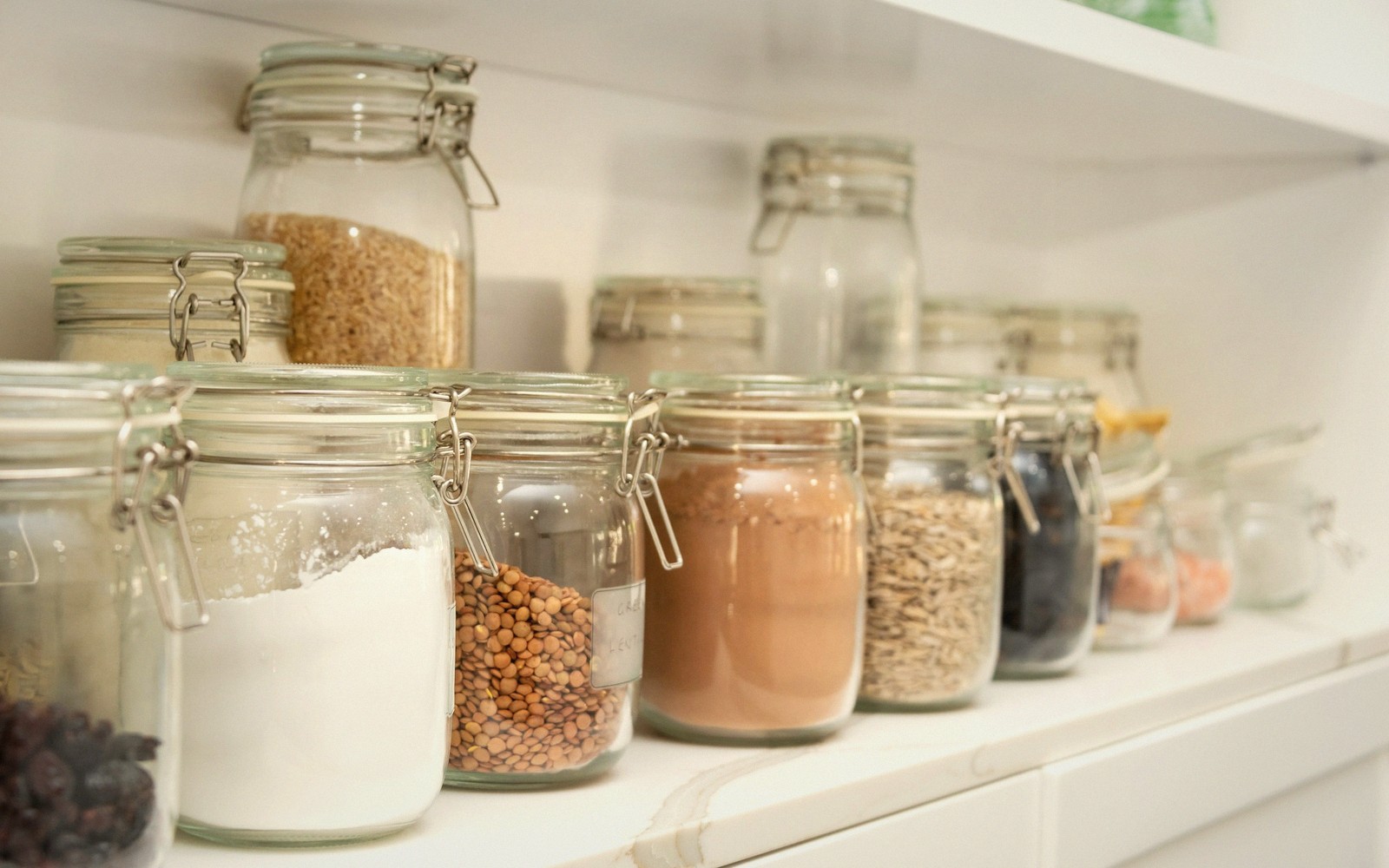
01The shelf that makes dinner a ten-minute problem — tins, oils, aromatics and the dried things worth the space.
If it only makes sense in one recipe you cook twice a year, it doesn't.
02The Logic of a Working Pantry
A good pantry isn't a stockpile — it's a rotation. The goal is to keep a small number of genuinely useful things that you actually cook with, so the shelf stays fresh and dinner stays possible on any given Tuesday. Forty tins you never open is not a pantry; it's a museum.
The question to ask of every ingredient: can it go directly into dinner, tonight, without much ceremony? If the answer is yes, it earns a place. If it only makes sense in one recipe you cook twice a year, it doesn't.
03Tins, Jars and the Wet Shelf
Tinned tomatoes are the non-negotiable. A couple of tins of whole plum tomatoes — San Marzano if the budget allows, a good Italian supermarket own-brand otherwise — will anchor a pasta sauce, a curry base, a braise. Whole tomatoes retain more liquid and tend to have better flavour than pre-chopped; crush them in the tin with your hand before they go in the pan. Alongside them, tinned chickpeas and white beans (cannellini or butter beans) do more weeknight heavy lifting than almost anything else: into soups, onto toast with olive oil and herbs, simmered with garlic and greens.
Anchovies deserve a dedicated jar in the fridge door. They're not a fish; they're a seasoning — dissolved into hot oil, they add salt and depth to pasta, broccoli, lamb, roasted peppers, almost without anyone noticing. Keep them in olive oil, not brine.
For the oils: one decent cooking olive oil (a young, mid-priced bottle you're comfortable using generously) and one finishing oil you're slightly precious with. They're different tools. You want a neutral oil too — groundnut or sunflower — for anything that needs a hot pan without smoke.
04Dried Things Worth the Space
Pasta, obviously — two shapes: a long shape (spaghetti or linguine) and a short one (rigatoni, penne, whatever you'll actually eat). Beyond pasta, dried lentils — specifically Puy or small green lentils, which hold their shape — cook in around twenty-five minutes and make an actual dinner with nothing more than a fried onion, good oil and a splash of vinegar.
Rice is worth keeping, and so are noodles if you cook in that direction. A block of dried rice noodles, a packet of ramen or egg noodles — they're ten-minute dinners on a tired evening. The key with noodles is knowing your own habits: buy what you'll reach for, not what looks versatile in theory.
Spices are the category most people do worst. Stale spice is barely worth the space. Keep fewer tins, buy smaller quantities, replace anything that no longer smells of anything. The list that actually earns its shelf: cumin (whole and ground), coriander, smoked paprika, dried chilli flakes, turmeric, cinnamon, and a jar of good flaky salt. That's it. Those seven things cover a remarkable range.
| Figure | What it's for |
|---|---|
| ~25 minutes | approximate cook time for Puy or small green lentils |
| 2 pasta shapes | the practical minimum to keep (one long, one short) |
| 7 spices | the suggested core spice drawer |
05Aromatics: The Fresh Things That Keep
Garlic and onions are perishable, but slow — keep a head of garlic and a few onions somewhere cool and dark and you'll have the start of any dinner for two weeks. Shallots keep even longer and have a quieter, more elegant flavour. A tube of tomato purée (or a small tin) is one of those things that seems like a bit player until you need it, at which point nothing else will do.
The final tier: a bottle of fish sauce if you cook anywhere near South-East Asian flavours; a jar of harissa for the weeks when everything needs a push; a tin of coconut milk for the same reason. These are amplifiers — not essentials for everyone, but once you start using them, the pantry without them feels thin.
That's the whole argument. A modest list of things, all in rotation, all earning their shelf. Not everything you might need — everything you actually use.