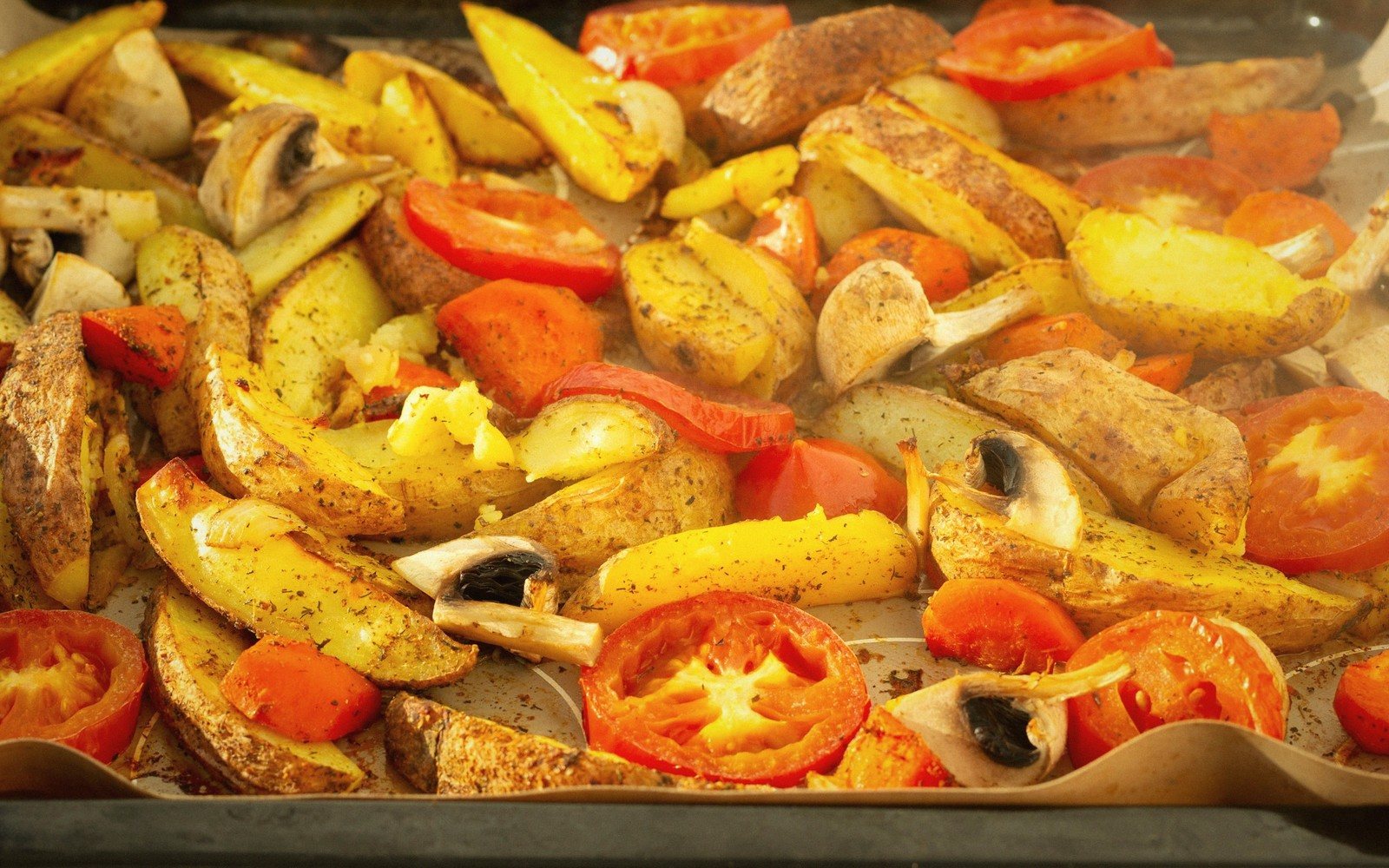
01The Case for One Hot Tray
Some weeknight dinners ask nothing of you except that you show up and turn the oven on. This is one of them. The method is barely a method: cut things, coat them in something deeply flavoured, spread them on a tray, and let dry heat do the rest. Thirty minutes gets you browned edges, concentrated juices, and a kitchen that doesn't look like a crime scene. No separate sauce, no juggling pans, no standing over anything.
Harissa is the ingredient that makes this version worth coming back to. The Tunisian chilli paste — built on roasted red peppers, dried chillies, caraway, cumin and coriander — brings heat, smokiness and a kind of background richness that no single spice can replicate. Supermarket tubes and jars work perfectly well here; rose harissa, which leans sweeter with a floral edge from dried rose petals, gives a slightly more perfumed result if you want it. Either way, you're doing in two spoonfuls what would otherwise take a dozen ingredients.
The base recipe runs like this: chicken thighs, bone-in and skin-on (the skin goes lacquered and crisp; boneless thighs are leaner and cook faster but lose something in texture), one or two vegetables that can handle twenty-five minutes of fierce heat, and enough harissa to coat everything generously. Add a tin of chickpeas if you want the tray to feed more people or stand alone as a complete meal — they soak up the cooking juices and go slightly crisp at the edges in a way that's quietly addictive. Scatter cherry tomatoes in the last ten minutes if they're around.
No separate sauce, no juggling pans, no standing over anything.
02How to Build It
The oven needs to be genuinely hot: 220°C fan, or 240°C conventional. Traybakes fail on two fronts — too much liquid pooling in the tray (steam, not roast) and too low a temperature (pale, soft, nothing caramelised). Both problems share the same fix: space and heat. Don't crowd the tray. If you're cooking for four, use two trays rather than one, because overlapping chicken thighs will braise each other.
Pat the chicken thighs dry with kitchen paper. Moisture on the surface is the enemy of a cracking skin. Mix two heaped tablespoons of harissa with a tablespoon of olive oil, a good pinch of salt, and a squeeze of lemon juice. Rub it over the chicken — under the skin if you're feeling methodical, which takes thirty seconds and makes a real difference. Let them sit while the oven heats up, which is all the marinating time a weeknight allows and all that's strictly necessary.
For vegetables, you want something that roasts well at high heat without collapsing to mush before the chicken is cooked through. Red onion wedges (cut root-to-tip so they hold together) are reliable and sweet. Red or yellow peppers, cut into wide strips, soften and char at the edges. Courgette works in larger pieces; it goes silky quickly, so cut it thick. Aubergine is excellent — cut into chunky cubes, it soaks up the harissa-laced juices and goes buttery inside with crisped edges out. For autumn and winter, par-boil waxy potatoes for eight minutes first, then add them to the tray, and they'll come out golden-skinned and cooked through in time with the chicken.
Drain and rinse a 400g tin of chickpeas, toss them in a little oil and salt, and add them to the tray with the vegetables. Arrange chicken thighs skin-side up across the top so the skin sits in hot air rather than cooking liquid. Into the oven for twenty-five minutes, checking once at the twenty-minute mark. The skin should be deep bronze, the juices running clear when you pierce the thickest part of the thigh near the bone.
Rest the chicken for five minutes before serving — this is not optional. The tray carries on cooking slightly off the heat, and the juices redistribute instead of running out onto the plate.
| Bone-in, skin-on thighs | Boneless thighs | |
|---|---|---|
| Texture | Skin lacquers and crisps; meat stays juicy | Leaner, softer — loses some richness |
| Timing | ~25 min at high heat | Faster; watch for drying |
| Best for | The classic tray with crisp skin | Speed on the busiest nights |
- Heat the oven220°C fan / 240°C conventional — genuinely hot, or nothing caramelises.
- Pat dry & coatDry the thighs; rub with harissa, oil, salt and lemon — under the skin if you're methodical.
- Fill the trayChickpeas and veg below, chicken skin-side up on top, nothing crowded.
- Roast 25 minutesCheck at 20; skin deep bronze, juices running clear near the bone.
- Rest 5 minutesOff the heat — juices settle instead of running onto the plate.
03The Swaps That Keep It Going All Year
The harissa-and-chickpea combination is a template, not a recipe set in concrete. Understand what each component is doing and the whole thing becomes endlessly adaptable.
Swap the protein. Skin-on salmon fillets go on the tray for the last twelve to fifteen minutes only, added after the vegetables have had a head start — the chickpeas and veg roast first, then the salmon goes on top with a harissa coat and the tray goes back in. Lamb shoulder chops follow the same time as chicken thighs, give or take, and take especially well to the caraway notes in the harissa. Whole skin-on sausages are the laziest version: straight onto the tray, no prep, done in twenty-five minutes and excellent with roasted peppers and the chickpeas alongside.
Swap the paste. Harissa is the workhorse here, but the same method takes to other concentrated flavour bases. A tablespoon of weeknight-curry spice paste coats chicken thighs beautifully — add a tin of coconut milk to the base of the tray to stop things drying out and you get something closer to a roasted curry. Miso thinned with a little rice vinegar and sesame oil does the same structural job with a different flavour direction entirely. Chermoula — a North African herb paste built on coriander, cumin and lemon — gives a greener, brighter result.
Swap the vegetables by season. Winter is the time for root vegetables: parsnips, beetroot and sweet potato cut into even chunks and started fifteen minutes before the chicken goes on. Spring greens don't belong in this kind of heat, but a handful of new potatoes with a smear of harissa and some whole spring onions added in the last five minutes makes a perfectly good seasonal pivot. In summer, when tomatoes are at their best, the cherry tomato addition becomes almost mandatory — they collapse into a jammy, intensely flavoured sauce on the base of the tray that needs nothing except something to scoop it with. Keep some flatbread or warmed pitta nearby for exactly this.
| Figure | What it's for |
|---|---|
| 220°C fan / 240°C conventional | correct oven temperature for the traybake |
| 25 minutes | core roasting time for bone-in chicken thighs |
| 400g | standard tin size for chickpeas |
| 12–15 minutes | roasting time for salmon fillets added late to the tray |
| 5 minutes | resting time for chicken off heat before serving |
| 8 minutes | par-boiling time for waxy potatoes before adding to the tray |
04Finishing the Tray
A traybake's secret weapon is what you do the moment it comes out of the oven. The pan juices — the reddish, spiced, slightly oily liquid pooled between the chickpeas — are worth nothing if you ignore them. Spoon them back over the chicken. Add a handful of flat-leaf parsley or coriander torn roughly over the top, and the fresh herb does what always happens when you add something raw to something roasted: it sharpens and lifts everything. A spoonful of cold yogurt alongside catches the heat and the spice. A squeeze of lemon over the whole tray at the table.
This is dinner that requires no explanation and no finishing at the stove. Carry the tray to the table, peel the parchment off in one sheet, and wash up in under three minutes. That is the whole point.