01The Only Tool Worth Obsessing Over
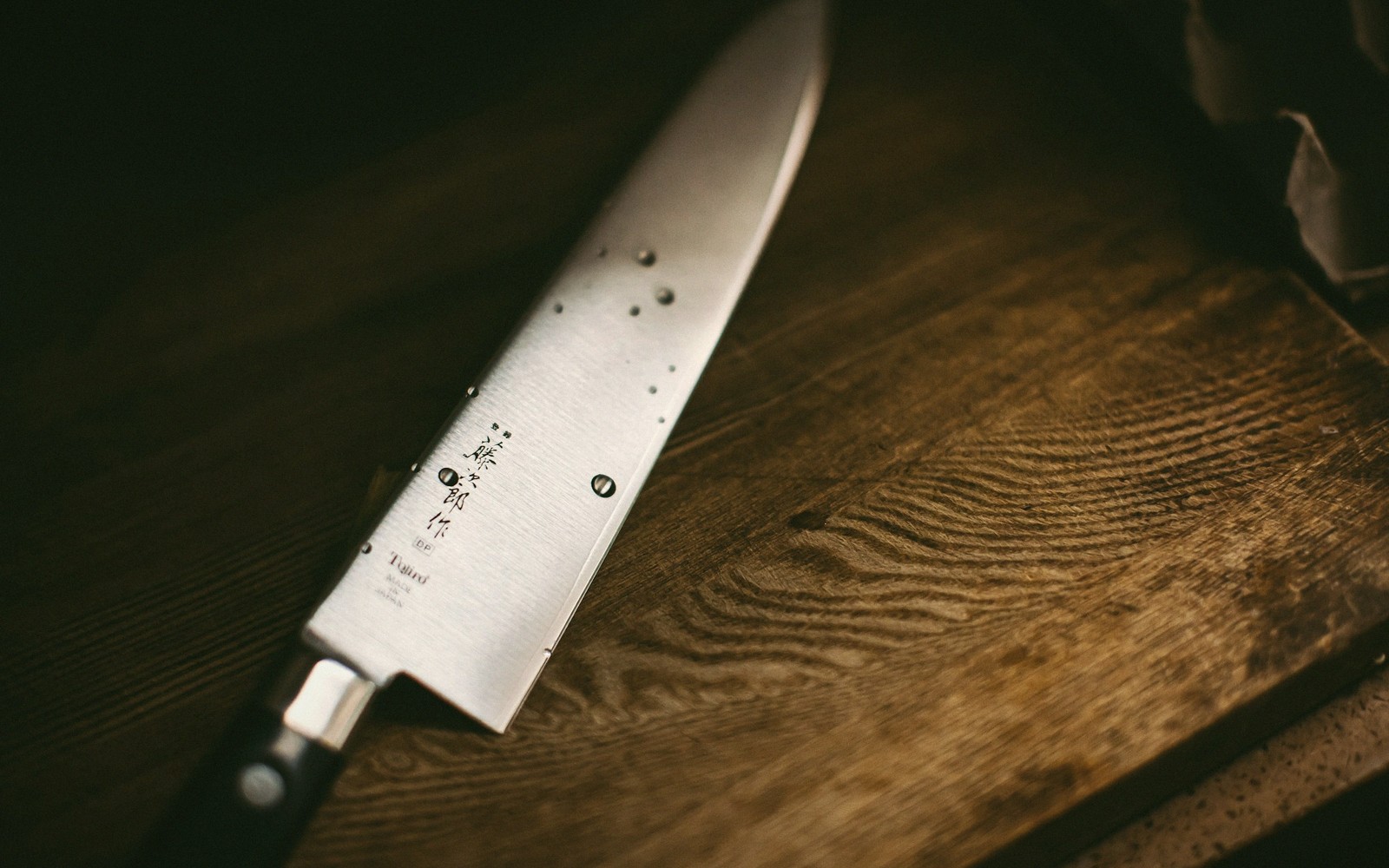
Most kitchen drawers are full of things bought in optimism: the mandoline used twice, the garlic press that's harder to clean than a knife, the bread knife that never quite earned its spot. None of it matters as much as a single, sharp chef's knife — probably eight inches, heavy enough to feel purposeful, light enough to use for twenty minutes without your forearm complaining.
The knife you want isn't necessarily expensive. German-style blades from makers like Wüsthof and Zwilling have earned their reputations over generations, but a well-made Japanese gyuto or a reliable mid-range option will do the same work if you keep it sharp. What you're looking for: a full tang (the metal runs all the way through the handle), a comfortable grip that doesn't shift, and a blade that holds an edge. Heft matters less than balance — pick it up, rock it over a chopping board, and trust your hand.
Sharp is the point. A blunt knife is the most dangerous thing in a kitchen, because it slips off the surface you're trying to cut instead of biting into it. A sharp blade does exactly what you ask — thin onion rings, a tomato halved without tearing, herbs chopped without bruising. The difference isn't marginal; it's the difference between cooking feeling effortful and cooking feeling fluent.
Keeping an edge doesn't require a knife sharpener every week. What it requires is a honing steel, used regularly. Honing doesn't remove metal — it realigns the blade's edge, which rolls microscopic amounts with every use. A few strokes before you start cooking, or every couple of sessions, is enough. When honing stops restoring the edge, then you sharpen: a whetstone is the proper tool, a pull-through sharpener the faster but coarser option. Once or twice a year is a reasonable rhythm for most home cooks.
Store it well and the edge lasts longer. A magnetic wall strip keeps the blade away from other metal; a wooden block works too. Rattling around in a drawer is what blunts knives between uses. And hand-wash it — the dishwasher is brutal on edges and handles alike.
That's genuinely all of it. One good knife, a honing steel, a wooden board (harder surfaces — glass, ceramic — wreck edges), and the habit of a few strokes before you cook. No gadget comes close to what that does for a weeknight dinner.
The difference isn't marginal; it's the difference between cooking feeling effortful and cooking feeling fluent.