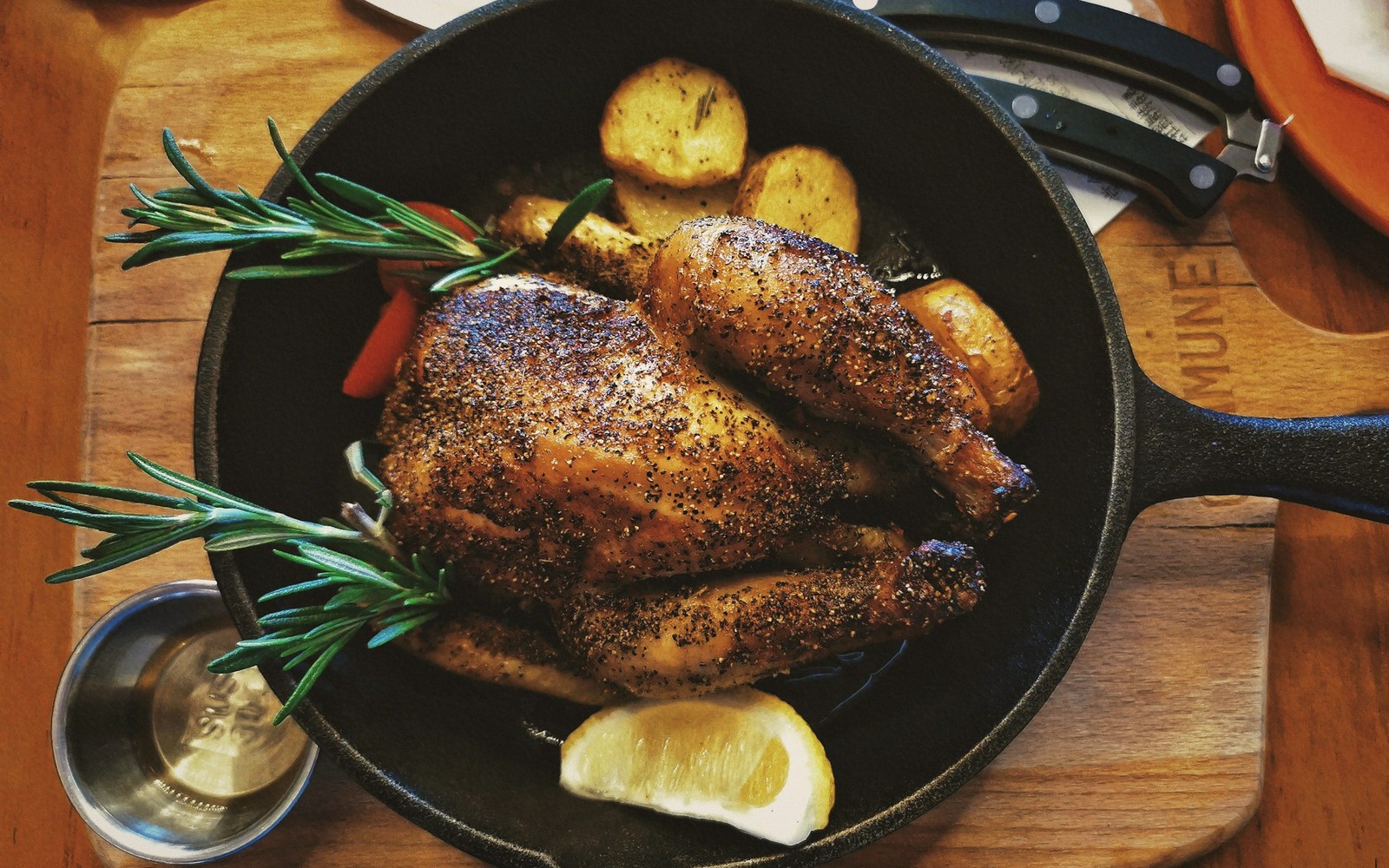
01Salt it early, roast it hot
The single biggest improvement you can make to a roast chicken costs nothing and requires zero extra equipment: salt it the night before, or at least in the morning. Pat the bird dry, rub flaky salt generously over every surface — including under the breast skin if you can loosen it with your fingers — and leave it uncovered in the fridge. The salt draws out surface moisture, then that moisture slowly reabsorbs, seasoning the meat from the outside in. By the time the bird goes into the oven, the skin is papery and dry, which is exactly what you want. Wet skin steams; dry skin crisps.
When the time comes, pull the chicken from the fridge a good half hour before roasting. A cold bird dropped into a hot oven takes longer to cook through, the outside running ahead of the inside. Room temperature evens that out.
For the oven itself, go hotter than you think: 220 °C fan (or 240 °C conventional) for most of the cook. Some recipes start low and crank the heat at the end to crisp the skin, but that extra step isn't necessary if the bird is dry and the oven is genuinely hot from the beginning. A 1.5 kg chicken at that temperature will be done in around fifty to fifty-five minutes. Don't rely on time alone — a probe thermometer into the thickest part of the thigh (not touching bone) should read 74 °C. That's the number that matters.
Elevate the chicken if you can — on a rack in the tin, or propped on halved onions and a few garlic cloves. Air circulating underneath means the underside colours and the fat renders properly, rather than the bird sitting in its own pooling juices and steaming from below.
When the time comes, pull the chicken from the fridge a good half hour before roasting.
02The resting rule and the stock after
Here is where most roast chickens are quietly ruined: they come out of the oven and go straight to the table. Rest the bird, loosely tented with foil, for at least fifteen minutes. The juices that have been driven to the centre of the meat by the heat redistribute as the temperature equalises. Cut into an unrested chicken and liquid pours out onto the board; rest it properly and the meat stays moist and the board stays clean. Twenty minutes won't cool the bird down enough to matter — the skin stays crisp, the meat stays hot.
While the chicken rests, tilt the roasting tin and spoon off the excess fat, leaving behind the dark, sticky, caramelised juices. Set the tin directly over a burner on medium heat, pour in a splash of white wine or a small glass of water, and scrape up everything from the bottom as it bubbles. That's your pan sauce — thin but deeply flavoured, and it takes ninety seconds to make. Pour it over carved pieces or into a small jug to pass at the table.
After dinner, the carcass goes into a pot. Cover it with cold water, add a halved onion, a few peppercorns, a bay leaf if you have one, and simmer for ninety minutes to two hours. The resulting stock — golden, gently gelatinous once it cools — is one of the most useful things a home kitchen produces. Freeze it in a jar and you have the base for a quick soup, a braised grain, or a sauce that tastes like it took far longer than it did.
| Figure | What it's for |
|---|---|
| 74 °C | safe internal temperature at thickest part of thigh |
| 220 °C fan / 230 °C conventional | recommended roasting temperature |
| 15–20 minutes | minimum resting time after the bird leaves the oven |
| 1.5 kg | reference chicken weight for the 50–55 minute cook time |
| 90 minutes to 2 hours | simmering time for carcass stock |
03A few small things that add up
Trussing is optional but useful if you remember: tying the legs together with kitchen string keeps the breast shielded slightly and helps the bird cook more evenly. A lemon halved and pushed inside the cavity adds steam and fragrance. Unsalted butter rubbed under the breast skin browns beautifully against the meat. None of these are essential — the salt, the dry skin, and the hot oven do most of the heavy lifting. Get those three right and the rest is just variations on a reliable theme.