01Every element of flavour runs through it
Salt doesn't just taste salty. It suppresses bitterness, amplifies sweetness, and opens up flavour compounds that would otherwise sit mute in a pan. Add it too late — a nervous sprinkle at the table — and you taste the salt before you taste the dish. Work it in at every stage and it becomes invisible, the reason the whole thing sings.
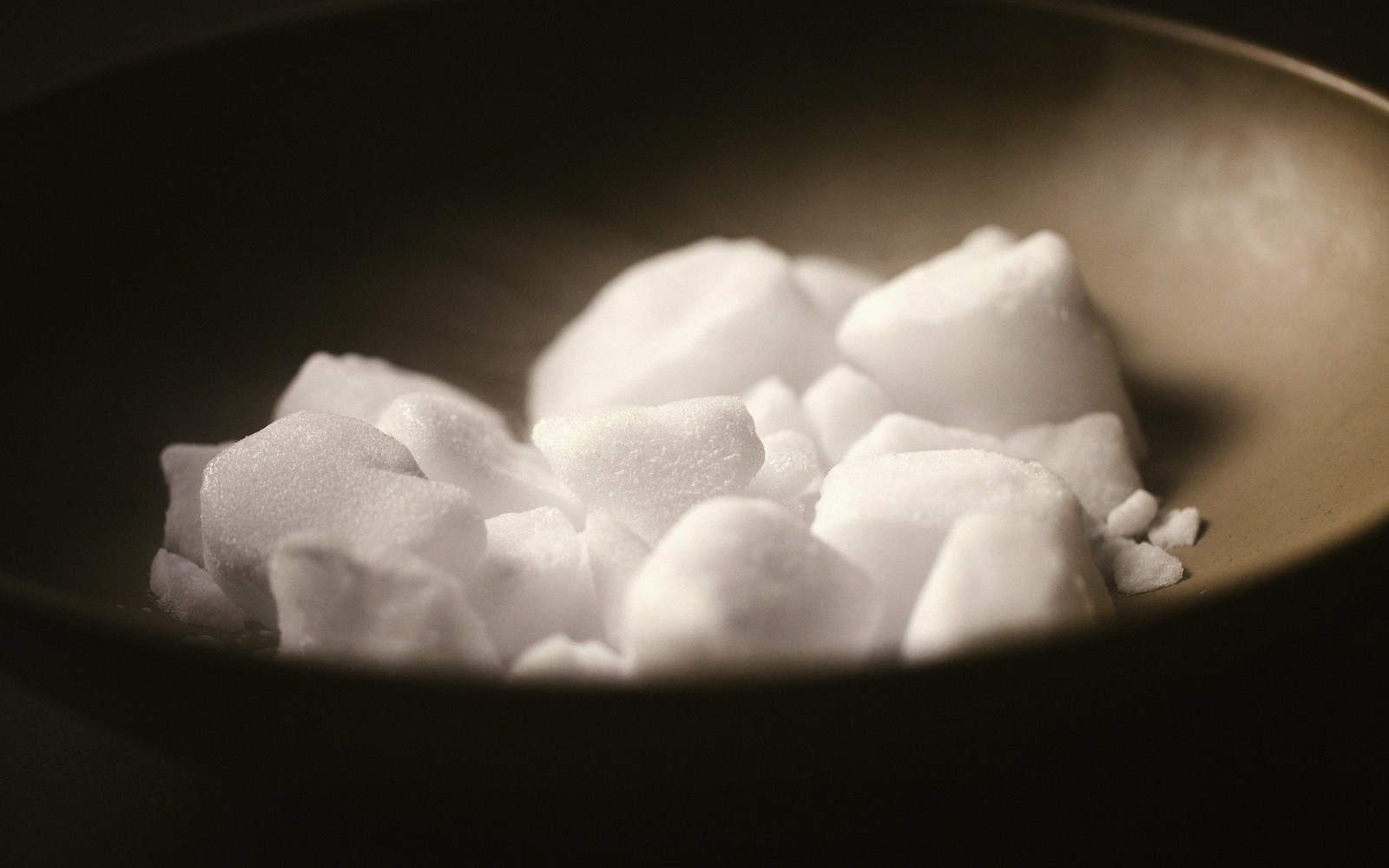
The three forms you'll actually use behave differently. Fine salt dissolves fast and measures predictably, which makes it the right call for pasta water, doughs, and brines. Flaky salt — Maldon is the benchmark — has large, irregular crystals that crunch, cling to a surface and melt just slowly enough to register. It belongs on finished food: a steak rested and sliced, a bowl of dressed leaves, chocolate something just out of the oven. Coarse kosher-style salt sits between the two — good for seasoning meat before it hits the heat, where the larger crystals draw out a little moisture and then dissolve back in as a light crust forms.
One number matters here: pasta water should be genuinely salty, about as salty as a well-seasoned broth — roughly 10 grams of fine salt per litre. Most people use less than a third of that and then wonder why the pasta tastes of nothing regardless of what sauce goes on top.
Seasoning as you go means building in small additions: salt the onion when it hits the pan, not after it's cooked down; taste the sauce before the acid goes in and again after; salt meat ahead of time if you have even twenty minutes spare, long enough for the moisture drawn out to reabsorb and carry salt into the muscle. This is not complicated. It's just habit.
Two common mistakes run in opposite directions. Under-salting is the most frequent — timidity, mainly. Over-salting usually comes from seasoning at the end rather than throughout, then over-correcting. If a dish genuinely goes too salty, acid or a splash more liquid can pull it back; adding a raw potato, despite the folk wisdom, does almost nothing.
Different salts also vary in saltiness by volume — Diamond Crystal kosher salt is significantly less dense than Morton's, which trips up anyone following American recipes. When in doubt, use weight rather than volume and you'll always be in the right territory.
Keep a small open bowl of fine salt beside the stove, a tin of flaky salt on the table. That's the whole system.
The three forms you'll actually use behave differently.